

Table of Contents
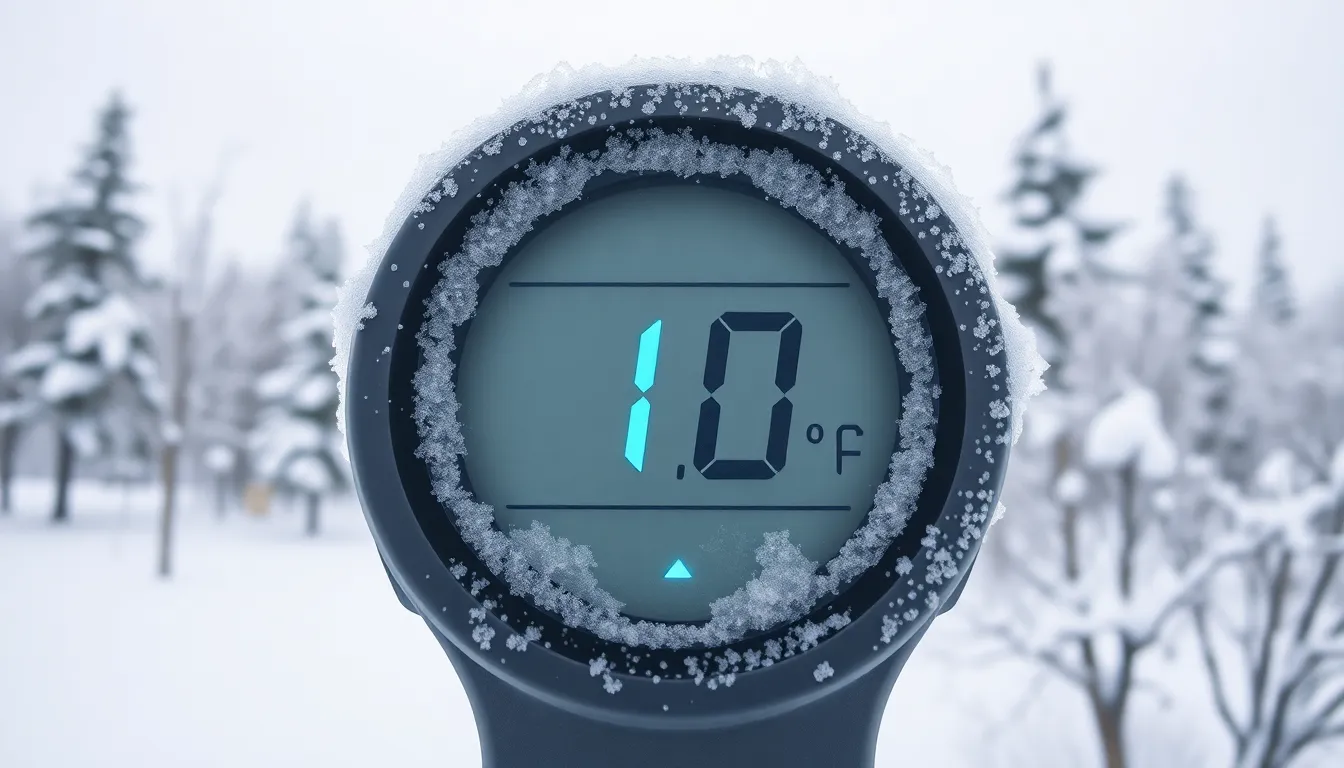
ToggleWhen the temperature drops, many people find themselves caught in the battle of Fahrenheit versus Celsius. It’s like a confusing math problem on a cold winter day. Ever wondered what 10 degrees Fahrenheit feels like in Celsius? Spoiler alert: it’s not exactly beach weather!
Understanding Temperature Scales
Temperature scales, primarily Fahrenheit and Celsius, serve as systems for measuring thermal energy. These scales operate differently, causing occasional confusion. Fahrenheit, a scale commonly used in the United States, defines freezing at 32°F and boiling at 212°F. Conversely, Celsius, utilized in most other countries, identifies freezing at 0°C and boiling at 100°C.
Converting Fahrenheit to Celsius involves a straightforward formula. The formula for this conversion is:
[
°C = frac{(°F – 32) times 5}{9}
]
This means that 10°F converts to roughly -12.2°C. In contrast, the Celsius system presents a more intuitive approach for many experiencing temperatures globally.
People often notice that discomfort arises at lower temperatures on both scales. While 10°F might seem like a modest number, its Celsius equivalent indicates significant cold. Knowing these conversions can be essential during climate discussions or travel planning.
Many find the scientific basis of temperature measurement fascinating. For instance, water’s freezing and boiling points illustrate how temperatures relate across different environments. Understanding these scales helps in interpreting weather reports effectively.
Knowledge of these differences and conversions enhances global communication about temperatures, promoting easier discussions. Familiarity with both scales benefits individuals traveling or interacting across different regions, ensuring clarity in conversation.
Conversion Formula
The conversion from Fahrenheit to Celsius relies on a simple formula. The formula used is:
[ C = frac{5}{9} times (F – 32) ]
Fahrenheit to Celsius Conversion
To find the Celsius equivalent for 10 degrees Fahrenheit, first apply the formula. By subtracting 32 from 10, the result is -22. Next, multiply -22 by 5/9 to arrive at approximately -12.2 degrees Celsius. This conversion highlights the stark contrast between the two temperature scales. Understanding this relationship becomes essential for accurate interpretation of temperature readings.
Practical Use of the Formula
Utilizing the formula for practical applications facilitates daily activities. Travelers benefit from knowing how to convert temperatures for different regions. Weather forecasts in Celsius often require conversions for American audiences. When planning outdoor activities, understanding these temperatures aids in clothing choices. Cross-country communication about weather becomes clearer with accurate conversions. Familiarity with both scales supports better preparation for various climates.
Example Conversions
Conversion between Fahrenheit and Celsius can often pose challenges. A commonly referenced temperature is 10 degrees Fahrenheit, which converts to approximately -12.2 degrees Celsius. This conversion uses the formula C = (5/9) × (F – 32).
10 Grados Fahrenheit a Centigrados
At 10 degrees Fahrenheit, the cold is evident, with temperatures falling well below freezing. To find the Celsius equivalent, plugging the Fahrenheit value into the formula yields -12.2 degrees Celsius. This stark temperature difference illustrates how chilling 10°F feels compared to more commonly understood Celsius values. It serves as an important example of how to apply the conversion formula effectively.
Comparison with Other Temperatures
Comparing 10 degrees Fahrenheit with other temperatures highlights the extremes of cold weather. For instance, 0°F converts to approximately -17.8°C, reinforcing the harshness of winter conditions. Additionally, 32°F equals 0°C, marking the freezing point of water, while 50°F approximates 10°C, representing milder temperatures. Familiarity with these conversions can aid in understanding weather forecasts and planning for outdoor activities in various climates.
Applications of Temperature Conversion
Understanding temperature conversion holds significant practical value across various fields. From day-to-day activities to scientific research, precise temperature readings enhance comprehension and planning.
Everyday Use Cases
Temperature conversions frequently affect daily life. Individuals cooking may rely on temperature scales for optimal food preparation. For example, a recipe calling for ingredients at specific Celsius temperatures could confuse American cooks unfamiliar with Celsius. Understanding conversions makes the process smoother. In clothing choices, knowing the temperature in Fahrenheit helps dress appropriately for cold or hot weather. Likewise, travelers can benefit from temperature knowledge when transitioning between regions using different scales. With accurate conversions, they can avoid unexpected discomfort.
Scientific Relevance
In science, accurate temperature measurement is crucial for experimentation and analysis. Many scientific studies utilize the Celsius scale, particularly in chemistry and biology. Researchers converting readings from Fahrenheit to Celsius ensures they accurately interpret data. Temperature directly impacts chemical reactions and biological processes, making precise measurements vital. Additionally, climate science relies on historical data often recorded in both scales. For climate models and forecasts, scientists convert temperatures to maintain consistency. Correct conversions facilitate effective communication of findings among international researchers.
Understanding the conversion between Fahrenheit and Celsius is essential for navigating temperature-related challenges. With 10 degrees Fahrenheit translating to around -12.2 degrees Celsius, it’s clear that this temperature is well below freezing. This knowledge proves invaluable not just for travelers but for anyone needing to interpret weather forecasts or plan outdoor activities.
Familiarity with both scales enhances daily life and ensures effective communication across different regions. Whether cooking or dressing for the weather, accurate temperature conversions make a significant difference. As global interactions increase, mastering these conversions will remain crucial for both personal and professional contexts.


