


Cats are notorious for their curious nature, often getting into things they shouldn’t. But when it comes to honey, pet owners might wonder if this sweet treat is a feline faux pas. After all, who wouldn’t want to share a little bit of nature’s candy with their furry friend? Picture this: a cat licking honey off a spoon, blissfully unaware of the potential consequences.
Understanding Honey
Honey contains a unique blend of sugars, enzymes, vitamins, and minerals. Its composition mainly consists of fructose and glucose, making it a concentrated source of energy. Honey also includes trace amounts of B vitamins, vitamin C, and antioxidants, which contribute to its health benefits.
Composition of Honey
Honey is primarily made up of sugars, with 38% fructose and 31% glucose. Water content typically ranges from 14% to 18%. This natural sweetener also contains small quantities of minerals such as calcium, potassium, and magnesium. The presence of phenolic compounds provides antioxidant properties. Variations in honey’s composition can arise from the source of nectar and environmental factors.
Nutritional Benefits for Humans
Nutritionally, honey offers several advantages for humans. This natural sweetener can serve as a quick energy source, ideal for athletes or active individuals. Antioxidants found in honey may assist in reducing inflammation and promoting heart health. Furthermore, honey is often used to soothe sore throats and alleviate coughs. Despite these benefits, moderation is essential due to its high sugar content.
Effects of Honey on Cats
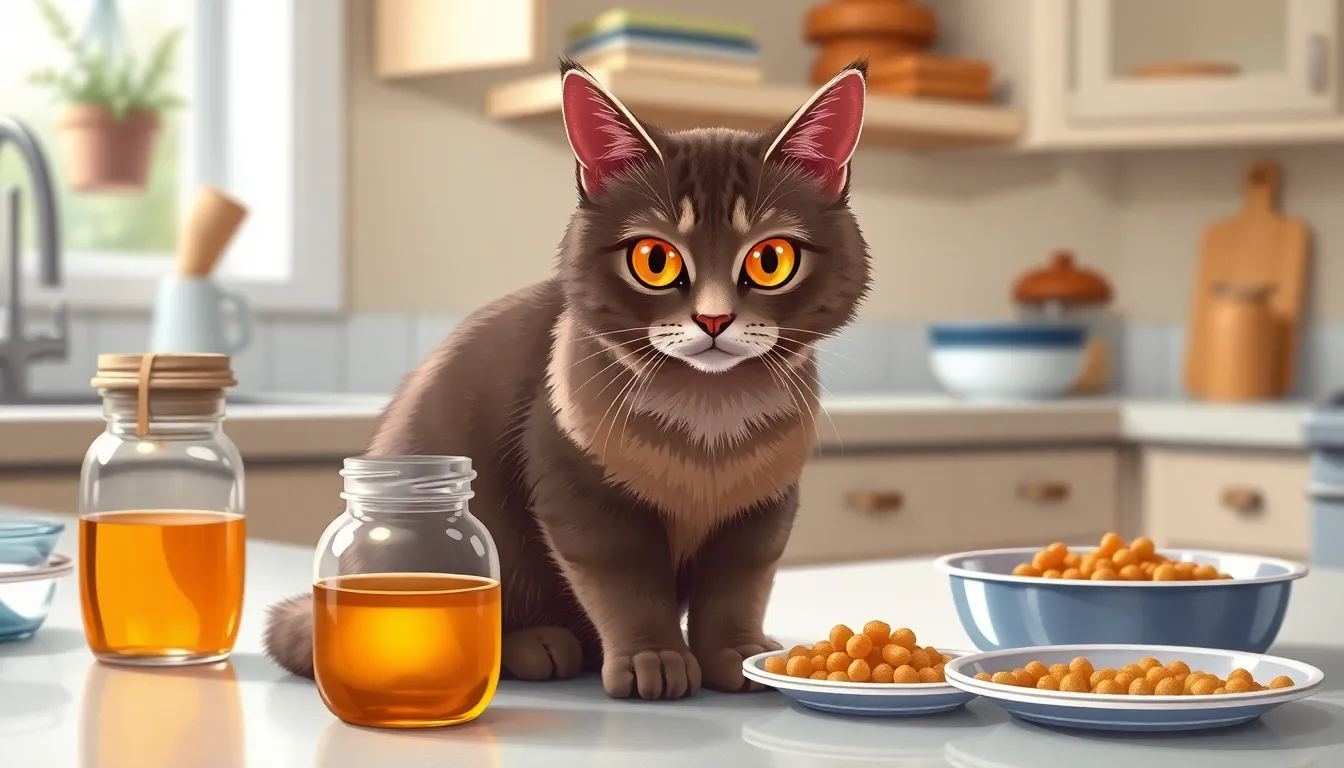
Honey poses certain risks for cats, making its consumption a debated topic among pet owners. While it offers health benefits for humans, cats metabolize substances differently.
Short-Term Effects
Short-term consumption of honey may cause immediate digestive upset in cats. Symptoms like vomiting or diarrhea can occur after ingesting even small amounts. Weight gain could happen due to honey’s high sugar content, leading to an altered energy balance. Cats may experience an increase in thirst, prompting them to drink more water. Allergic reactions could also surface in some cases, resulting in itching or swelling around the mouth and face.
Long-Term Effects
Long-term honey consumption can lead to obesity in cats if their diet isn’t properly managed. Increased risk of dental issues develops due to sugar promoting plaque and tartar buildup. Diabetes is a potential concern, particularly for those predisposed to the condition. Chronic inflammation may arise from excessive sugar intake, potentially causing various health problems. Additionally, cats lacking natural enzymes for processing sugars may not tolerate honey well over time.
Potential Risks of Honey for Cats
Cats can experience various health issues when consuming honey. Understanding these risks is crucial for pet owners.
Allergic Reactions
Some cats may develop allergic reactions after ingesting honey. Symptoms include itching, swelling, or difficulty breathing. These reactions stem from the proteins and compounds in honey. A small number of cats might possess sensitivities to these substances. Monitor any signs of allergy closely, as immediate veterinary attention could be necessary in severe cases.
Digestive Issues
Honey can cause digestive issues in cats, particularly due to its high sugar content. Common symptoms include vomiting and diarrhea. Cats’ digestive systems aren’t designed to handle sugars efficiently. Given their natural carnivorous diet, their enzymes often struggle with sweet substances. Prolonged digestive upset can lead to dehydration and further complications. Observing any adverse reactions promptly aids in managing the cat’s health effectively.
Alternatives to Honey for Cats
Cats can enjoy safe treats that provide health benefits without the risks associated with honey. Pet owners can consider several alternatives that satisfy their feline friends.
Safe Treat Options
Cooked meats serve as excellent treat options for cats. Options like chicken and turkey are both flavorful and nutritious. Small, bite-sized pieces ensure easy consumption. Additionally, freeze-dried fish, such as salmon, can offer a crunchy texture that many cats love. Commercially prepared cat treats often contain natural ingredients and come in various flavors. Reading labels helps identify suitable products that prioritize feline health.
Natural Sweeteners
Maple syrup can act as a natural sweetener, but moderation is key. Agave nectar is another option, albeit with caution due to high sugar levels. Furthermore, pureed pumpkin offers a naturally sweet taste that some cats enjoy. Always ensure any sweetener used is safe and only given in small amounts. A healthcare professional’s advice can help clarify which options are appropriate for individual cats.
While honey might seem like a sweet treat for curious cats it’s essential to recognize the potential risks involved. Cats lack the necessary enzymes to process sugars effectively which can lead to digestive issues and other health concerns. Allergic reactions are also a possibility and can pose serious threats to a cat’s well-being.
Pet owners should prioritize their feline friends’ health by opting for safer alternatives that provide enjoyment without the risks associated with honey. Consulting with a veterinarian can help ensure that any treats offered are both safe and beneficial for a cat’s diet. Keeping cats healthy and happy is the ultimate goal for any responsible pet owner.


